Oreo = Wonderful

Oreo Wonderfilled

Oreo Wonderfilled

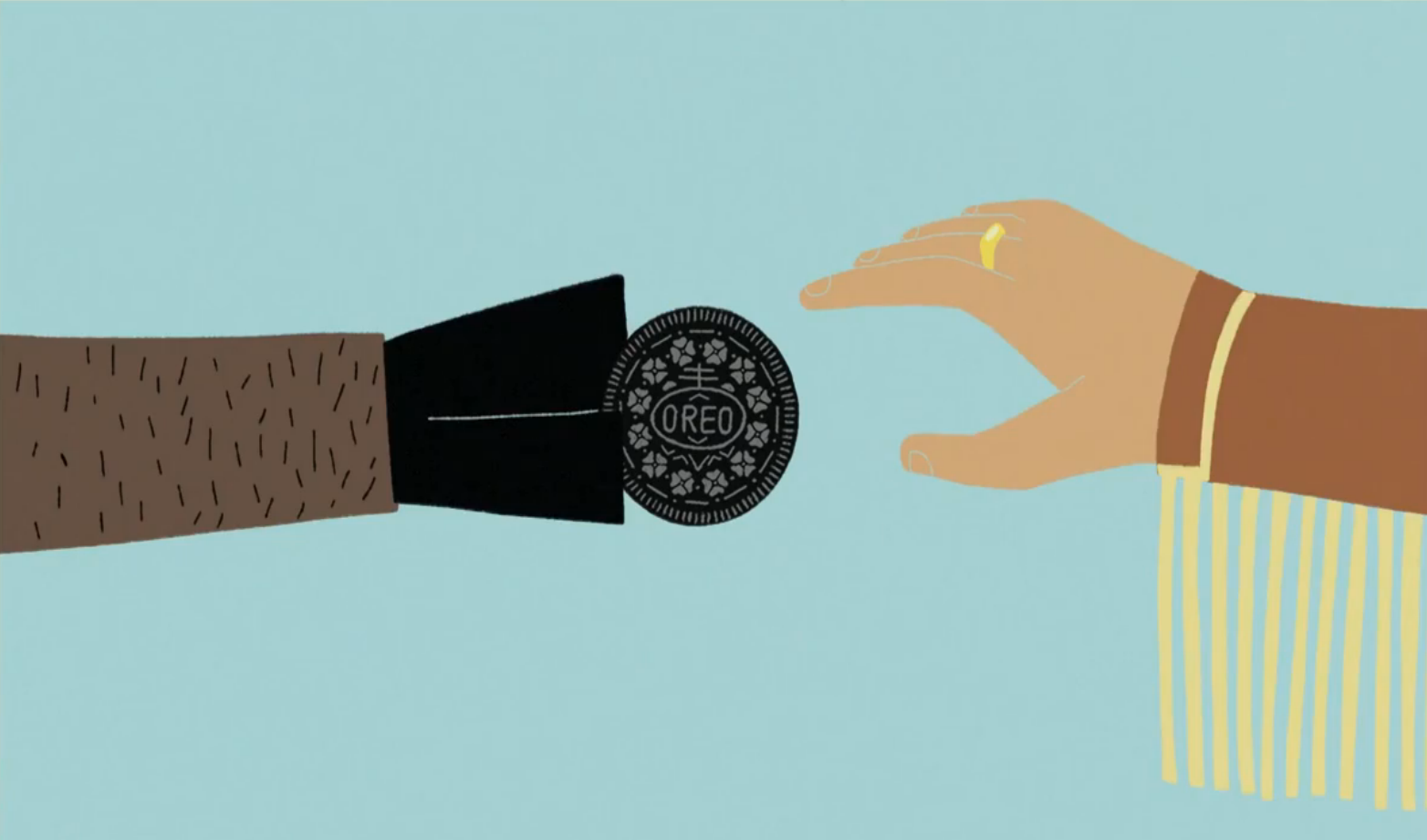
It’s been a while since a campaign has made me stop in my tracks and take a second look, but Oreo’s new “Wonderfilled” campaign by Martin Agency did just that. Although the creative brand strategy doesn’t stray far from Oreo’s tried and true “people coming together when they share an Oreo”, the execution is so unique, it gives the brand a much-needed shot of adrenalin. Fueled by the images of Barcelona-based animator Martin Allais and a tune performed by Owl City’s Adam Young, the spot stands out in the sea of traditional live action advertising. The campaign also launched with a series of flash mob sing-alongs that will form part of a Vine social media extension. What’s even more surprising is that the spot is in essence one long product demo like many of Oreo’s past television spots, and yet it sidesteps all the usual pitfalls of this traditional approach, to create something that is entirely entertaining and magical. (Last year’s “Moving Day” spot seems treacle sweet by comparison). This is testament again to the truth that sometimes taking a big creative risk can have a huge pay-off. I defy anyone to feel cynical or jaded after they watch this spot – at least for a few minutes.

peter g

“Team Americano” Rocks Christopher Bastin or When Bloggers Become Marketing Campaigns

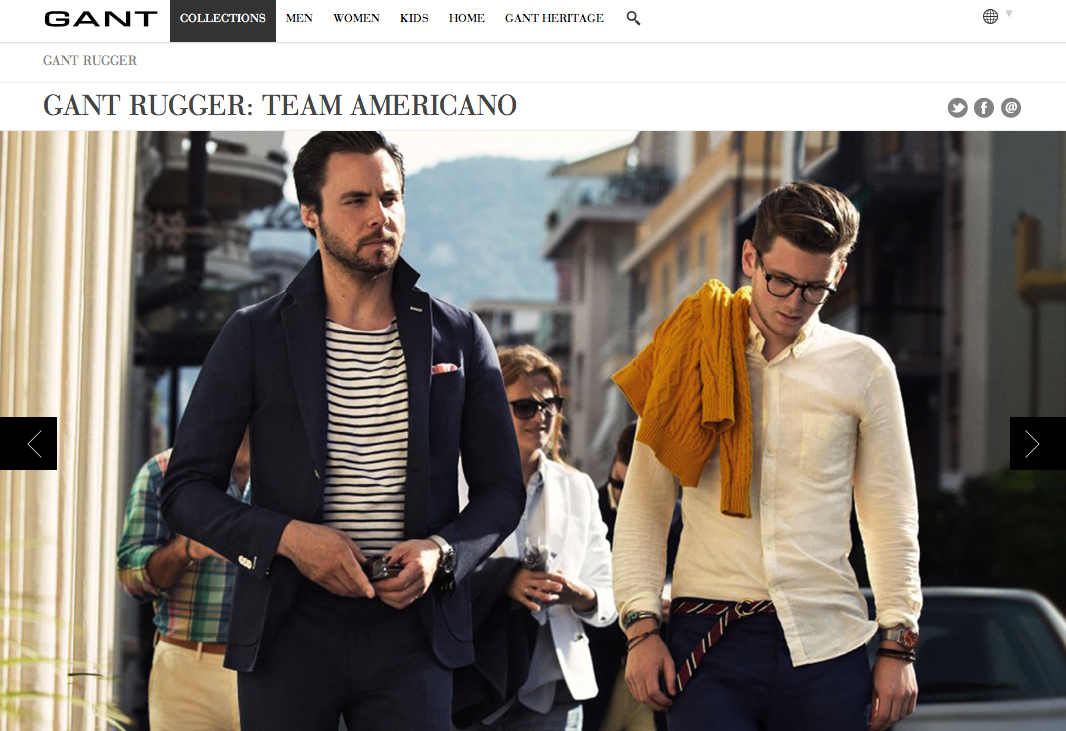
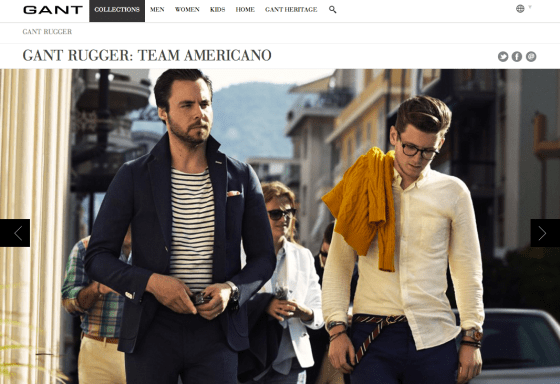
Gant Rugger Spring 2013 Campaign: Team Americano

Gant Rugger Spring 2013 Campaign: Team Americano

Iconic eighties brand Gant Rugger unveiled their latest marketing campaign titled “Team Americano” turning traditional blogger outreach on its head. The fashion line, which was re-launched in 2010 under the creative direction of Christopher Bastin, features a handful of New York fashion bloggers as their actual models.

Shot in Florence while attending the Pitti Immagine Uomo men’s wear trade show, the campaign exists not only through the lens of Gant Rugger photographer Derrick Leung, but through the bloggers’ photography and posts on their own social media sites. The 6 amateur models include: Gabe Alonso (Senior Editor at Gilt Man), Justin Chung (fashion photographer), Zeph Colombatto (fashion writer), Noah Emrich (photographer), Sean Hotchkiss (photographer), and Lawrence Schlossman (Editor-in-Chief at Four-Pins.com). A quick click through their blogs will make even the sharpest urbanite feel sartorially challenged. Not surprisingly, all six were given free rein to style pieces from the Spring 2013 line themselves, affording the campaign a sense of un-studied studiedness.

Retail brand J. Crew executed a similar campaign last year called “Hello, World!” They hired blogger/photographer Scott Schumann (the Sartorialist) and blogger/illustrator Garance Doré to document 9 global stylemakers integrating J. Crew pieces into their wardrobe, allowing each to showcase their own personal sense of style. The images and videos were cross-pollinated over all three sites extending the mass brand’s reach into more independent fashion circles.

In both cases, the bloggers openly acknowledged being paid for their work, and in the marketing world, ROI would be the hard-and-fast rule to measure success. In the fashion world however, where brand reputations are born overnight but are also just as fleeting, building credibility through more indie sources can have a slow burn effect that is difficult to quantify. Mainstream brands like J. Crew (with style icon Jenna Lyons at the helm) and Gant Rugger (under the guidance of Christopher Bastin) have just enough cool factor to be plausibly leveraging this type of campaign. This semblance of authenticity is exactly what both brands are banking on, building on the street cred and social reach of these bloggers to create micro-campaigns beyond the mass campaign. Successfully navigating the fine line between blogger authenticity and paid advertising is a key to their success, and in many ways explains how both these brands are given license to blur those boundaries.

peter g
P&G’s 15 minutes of fame, sort of…

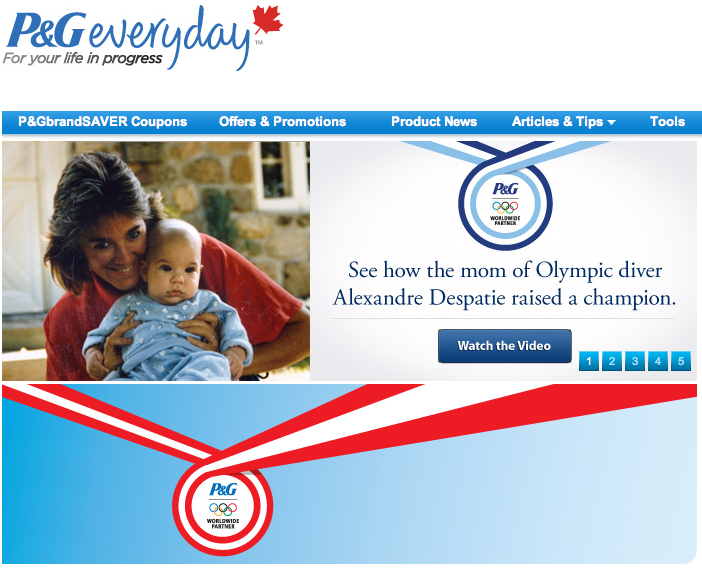
P&G Thank You, Mom

Anyone in the marketing industry – agency side, has at some point in the recent past either recommended, advocated, promised or suggested the need for creative to go viral. Unfortunately for all of us, the desire for anything to go viral and the reality of an idea doing so, is a divide that is not often breached. Cue the current P&G Thank You, Mom Olympic campaign. The 2012 TV spot has been in heavy rotation for the last 4 months leading up to the London games, so much so, that I actually checked out the full two minute commercial online (which I must admit still gets me a little watery-eyed). With the opening ceremonies underway, I was intrigued to find the music track for the spot by Ludovico Einaudi (“Divenire”) trending on YouTube today with over 1.2 million views. The video was posted almost 2 years ago, but the combination of heavy TV rotation, the biggest global sporting event about to begin, and a moving classical music piece have together created a viral perfect storm. And so Ludovico Einaudi, an Italian composer relatively unknown in North American, is now poised for his 15 minutes of fame. Probably not how P&G would have played it out, but having someone steal the spotlight from you means, at the very least, that you’re on the stage.

peter g

#4 / The 5 things I learned, but already knew from the Post-Advertising Summit

Mapping the TV Genome

Data is the new sexy 

In the world of marketing, when someone utters the word “data”, let’s be honest, it doesn’t exactly conjure up images of Mad Men’s Madison Avenue; but Bluefin Labs is trying to change all that. Founded by two Ph.D. grads from MIT, Bluefin has applied cognitive science combined with large scale computing to successfully link TV to social media and have developed what they call “Social TV Analytics”.  The algorithms they have created use what is called “language grounding” to attach language to context, enabling their technology to listen to everything that is happening in social media and map it back to the TV stimulus that generated the conversation in the first place.  The data produced from this media analysis mapping is known as the TV Genome – and its media and commercial applications are pretty evident.  Need to know which TV shows are generating the most social engagement by audience segmentation – Bluefin has the answer… and I suspect a lot more. Bluefin is currently partnering with leading global brands, advertising agencies, and TV networks to leverage the “TV Genome” for everything from media planning to uncovering consumer insights. I highly recommend you watch founder Deb Roy’s TED talk on “The Birth of a Word” – fascinating stuff…
Maybe data can be sexy after all.

Final Post: The Hunger Games and Social Media

peter g

#3 / The 5 things I learned, but already knew from the Post-Advertising Summit

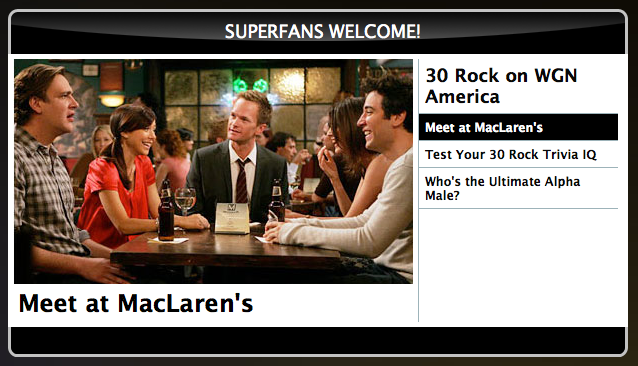
WGN Superfans: "How I Met Your Mother"

Traditional Networks are trying to evolve

If you think most networks are unable to adapt to the new reality of the online world, Josh Richman, VP Marketing at WGN America would beg to differ. The network has been actively cultivating their personal group of social influencers. They have identified brand ambassadors (Superfans) based on members who are signed up to their cable channel, and engaged in content on Facebook leveraged around their syndicated programming. These “Superfans” generate content promoting WGN’s line-up and keep engagement levels up, a unique challenge for WGN since they don’t actually create any of their own TV shows. Whether these activities are bearing fruit is hard to say, since I’m guessing they rely on traditional advertising as a primary revenue stream. But it is surprising to see how many viewers are engaged in content WGN has created around their “borrowed” programming… or maybe 1,093, 541 fans just don’t realize they’re not on the official How I Met Your Mother Facebook page?
Did I say there was something to be learned here? I’ve forgotten…

Tomorrow: Social Media chatter and BlueFin Labs

peter g

#2 / The 5 things I learned, but already knew from the Post-Advertising Summit

Jedi Kittens Strike Back

Jedi Kittens Strike Back

If Wharton is trying to figure out what makes ads go viral…shouldn’t you?

It was an eye opener to learn that business professors and statisticians, at one of the most prestigious business schools in the United States, are trying to distill a formula that guarantees online viral success. Although I have a fundamental problem with trying to define creativity in quantitative terms, the fact that they are even attempting this signals that achieving “viral” status has moved beyond the boardroom table and into the classroom. As educators begin to incorporate this challenge into curricula, “bottling” creativity as a series of basic principles to be instilled in the next generation of marketers is well underway. I won’t get into the tedious details of their research methodology, the controls, the scoring, etc., but for what it’s worth, their findings suggest that there are 4 common denominators that characterize successful viral videos. They must be: creative, surprising, emotional, and of course cute. In the end, are the results really that surprising? In fact, the first 3 characteristics could describe probably all of the great advertising campaigns of the last 25 years. So for a creative person, there isn’t much here that is new. Cute, on the other hand, is another story…Cue the cat video.

Tomorrow: How traditional television networks are leveraging social media

peter g

#1 / The 5 things I learned…but already knew from the Post-Advertising Summit

Post-Advertising Summit

I recently attended the Post Advertising Summit in New York city hosted by Story Worldwide; and as with any conference, you always hope to walk away knowing more than when you traipsed in. I must admit I was a bit disappointed on this front, but I can say that it did expand on a few things I already knew. Here are 5 things I kind of already knew, but found a new spin on…

The notion of authenticity has evolved in the post social media world
Adopting “authenticity” as a cornerstone of your social media strategy has long been a maxim of the online world. The notion that transparency and openness are key to ensuring that consumers trust a brand and are willing to engage in a dialogue, have almost become the hackneyed statements of the marketing community. What’s interesting though, is that this notion of “authenticity” has slowly evolved into an opportunity for content and storytelling. Acknowledging failures and shortcomings (before they’re dredged up by consumers) is the new way to tell stories about how you’re growing as a brand. Or why you’ve decided to change. Humility is in. Check out a few classics:

Domino’s
Chipotle
Patagonia

Tomorrow: What Wharton can teach you about viral videos….

peter g

Does Collaboration = Mediocrity?

A recent op-ed piece in The New York Times Sunday Review titled “The Rise of the New Groupthink” by Susan Cain is stirring quite the debate. The writer’s main thesis postulates that the growing cultural trend towards group collaboration is hindering our creativity and societal achievements. Needless to say, this goes against the grain most of us experience in the workplace. Being a creative director, and having built a career on the merit of my ideas, this discourse hits close to home. I believe Cain initiates a compelling argument around the benefits of solitary thinking but perhaps overgeneralizes the notion of what it means to be creative or generate creative ideas. Truly great ideas that change our perspective of the world around us, must inevitably have the power and strength to stand out from the rest. To do so, they must have vision. And it follows, that to have true vision, they must invariably have a singular point of view. That’s where her argument gathers steam. If we name any of the great creative innovators in the last 20 years who have made an impact on the creative landscape, their genius is born from a singular vision and certainly not from large group collaboration. In fact, it is almost inherent that truly creative ideas should breed discord, since this is what sets them apart from the rest; and yet conversely, they must find a resonant key to capture our collective imagination. I think this is where most organizations and creative workplaces fall short. The challenge truly becomes deciding when one must have vision and allow for singularity to generate a creative idea versus when one needs group collaboration and consensus to creatively solve a problem. And speaking from experience, and as Susan Cain points out, our cultural/workplace bias is to always defer to the latter.

peter g

The Big Blue

With the prospect of another slowdown facing the American economy, it’s interesting to remark on the new brand positioning home improvement retailer,Lowe’s, has launched to weather these uncertain times. Rather than jump on the “value and savings” bandwagon, they have opted to strike an emotional cord. “Never stop improving” is the rallying cry that marketing Senior Vice President Tom Lamb, is hoping will resonate with consumers. What’s more, the mantra is both a call to action for consumers as well as a corporate brand promise to deliver innovations to the category. The accompanying TV campaign tugs at the heartstrings as it follows a couple, from innocent youth to their golden age, dancing through the interiors of their ever changing, “improving” home. I’m always a sucker for the emotional card, but I also must admit that it’s refreshing to see a retailer sending out a loftier message these days. The inspirational double-edge slogan, which speaks to the consumer’s mindset as well as the corporate ethos, has a history of success with company’s looking to stand out in the crowd; most notably, Apple’s “Think Different” campaign that challenged the individual as well as championing the company’s philosophy. By combining some cool editing, post effects, and a catchy tune by New Zealander Gin Wigmore, the spot’s optimism is infectious and impossible to resist. It’s true brand building at its emotive best.

peter g

Bridging the GAP

In an effort to revitalize their waning brand, Gap recently launched a series of YouTube videos profiling the creativity of the newly established 1969 denim design studio in downtown Los Angeles. Chief Global Marketing Officer, Seth Farbman, acknowledges that the retailer needed to re-capture the highly influential twenty-something generation. He believes that seeding a viral storytelling campaign is a strategy that will help them connect again. Forming a small, nuclear studio apart from the corporate San Francisco Gap headquarters, was seen as the first step in rebooting the fashion retailer as a cooler, more relevant brand that holds creativity as a key driver of the business. It follows, that documenting this new ethos in a series of online videos, versus the more traditional advertising route, was the best approach in winning over this elusive consumer. Where the strategy falls short however, is at store level. The notion that you can re-invent the brand from a philosophical, production standpoint is only half of the equation – the store experience is the other – and here, Gap is still the same old Gap. The message can be meaningful and can resonate with customers, but if the actual experience doesn’t deliver on the promise, you’ve lost the attempt at demonstrating any authentic desire for change… So in the end, all you have is a corporate wolf in creative sheep’s clothing…

peter g

Blog at WordPress.com.